Roadmap drift is usually quiet.
It does not start with a dramatic failure. It starts with small mismatches: the roadmap says one thing, the task board shows another, the decision changed in a meeting, a dependency appeared in chat, and the release plan has not caught up yet.
By the time everyone notices, the roadmap is no longer a working view of the project. It is a story from two weeks ago.
That is why I think roadmap planning has to stay close to execution. A roadmap should help a team make tradeoffs while there is still time to adjust, not explain after the fact what the team once hoped would happen.
Drift Starts When Plans and Work Separate
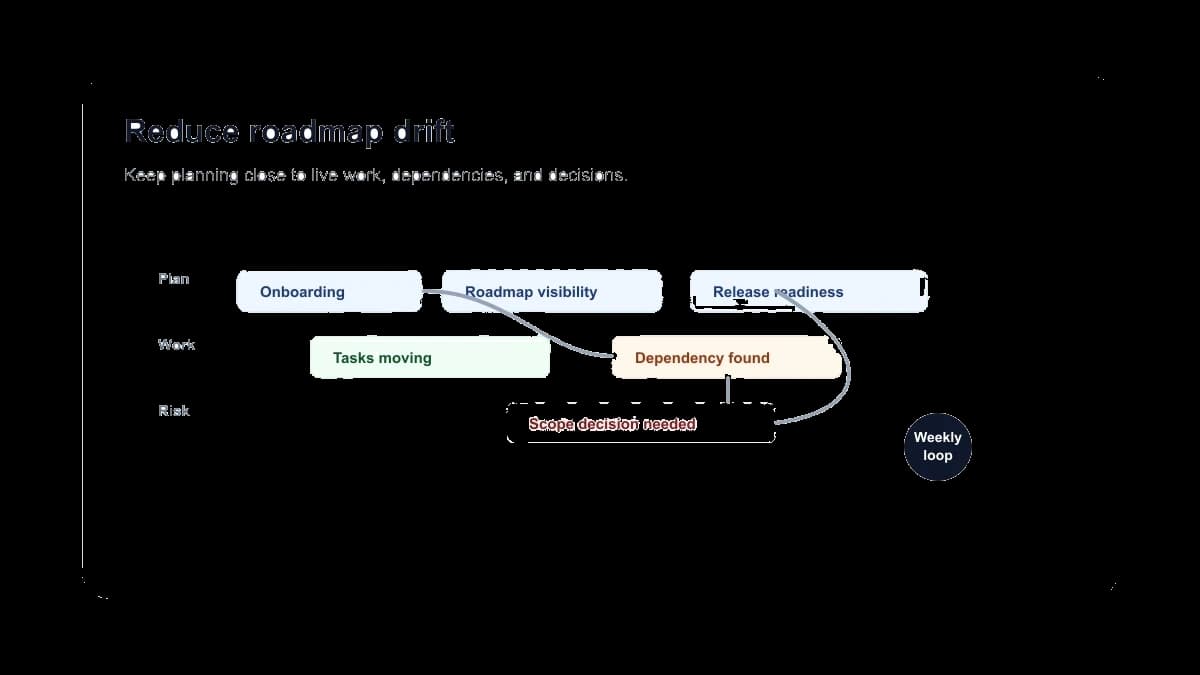
Roadmaps drift when the plan stops moving with the work.
The team may still be busy. Tasks may still be moving. Engineers may know exactly what is blocked. Product may know why scope changed. A founder may know which customer promise matters most. But if those changes do not reach the roadmap, the plan becomes less trustworthy each day.
The problem is not always discipline. It is often distance.
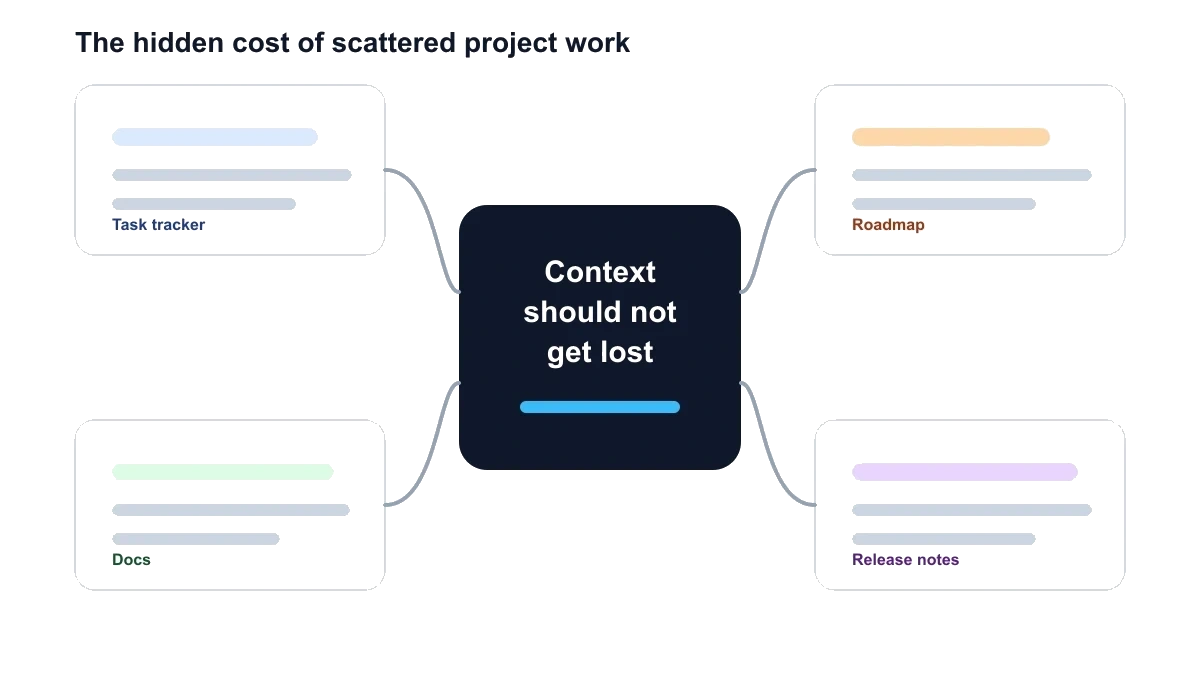
Planning lives in one place. Delivery lives in another. Decisions live somewhere else. Release scope gets updated later. The roadmap becomes a view that has to be manually reconciled with the rest of the project.
That creates stale assumptions:
- stakeholders think a date is still realistic
- engineers know a dependency is blocking the work
- product has changed scope but the milestone still looks unchanged
- release notes are written after everyone forgot what moved
- a decision is current in chat but missing from the plan
- the team keeps discussing status instead of making tradeoffs
Roadmap drift is not just a planning problem. It is a project-state problem.
The Weekly Loop Should Be Small
The answer is not a heavier roadmap process.
In small teams, the weekly roadmap loop should be short enough to survive. If it becomes a long ceremony, people will either skip it or perform it without thinking. The point is not to admire the roadmap. The point is to compare the plan against reality and decide what needs to change.
A useful loop can be 20 minutes:
- Re-state the current milestone outcomes.
- Check what changed in live work.
- Review dependency risk.
- Decide whether to keep scope, shift timing, split work, or escalate a blocker.
- Record the decision close to the roadmap and affected tasks.
That is enough structure to reduce surprise without turning roadmap maintenance into its own project.
Start With Outcomes, Not Tasks
A weekly roadmap check should start with the outcome the milestone is supposed to create.
Tasks change. Scope changes. Implementation details change. The outcome is the anchor that lets the team decide whether those changes matter.
Avoid vague outcomes like:
- "Improve onboarding"
- "Launch reporting"
- "Clean up billing"
Use outcomes that create a visible decision point:
- "A new user can create a project and invite a teammate without help."
- "A workspace owner can see the reporting data needed for weekly review."
- "Billing state is reliable enough to support team workspaces."
Once the outcome is clear, the team can make better tradeoffs. If a task slips but the outcome is still achievable, maybe the plan holds. If a dependency blocks the outcome, the roadmap needs to change.
Check Live Work Against the Plan
This is where drift becomes visible.
Do not ask, "Is the roadmap updated?" Ask:
- Which roadmap items no longer match the task board?
- Which tasks changed scope this week?
- Which completed work is not reflected in the plan?
- Which planned work no longer supports the outcome?
- Which new issue affects release timing?
The goal is to find differences early while they are still cheap.
When the roadmap and task board disagree, the team should treat that as useful signal. It means the plan is being tested by reality. The only failure is letting the mismatch sit long enough that people start making decisions from stale information.
Look for Dependency Changes First
Dependencies create the most expensive kind of drift.
A single task running late is often manageable. A dependency change can alter several workstreams at once. It can make a roadmap date unrealistic, turn a low-risk milestone into a risky one, or force the team to split a release.
That is why the weekly check should look for dependency changes early:
- What now blocks something else?
- What work is waiting on a decision?
- What decision is waiting on technical validation?
- What shipped but has not been reflected in the roadmap?
- What external constraint changed timing?
- What release depends on work that is still uncertain?
If the roadmap cannot show dependency risk, the team will discover it through pain.
Decide What Changes
Roadmap maintenance should lead to decisions.
After checking live work and dependencies, the team should decide one of four things:
- Keep scope because the outcome is still realistic.
- Shift timing because the outcome still matters but the current date is not credible.
- Split work because part of the outcome can ship while the rest waits.
- Escalate a blocker because a decision, dependency, or owner is needed before the team can move.
This is where a roadmap becomes useful. It stops being a static promise and becomes a place to make tradeoffs.
The worst version is pretending nothing changed because updating the roadmap feels uncomfortable. The second-worst version is changing the roadmap without recording why. Both create future confusion.
Keep the Decision Record Close
Every roadmap change should leave behind a small decision record.
It does not need to be long. It needs to be close enough to the work that future readers can understand why the plan moved.
A useful record answers:
- What changed?
- Why did it change?
- Which tasks, docs, or releases are affected?
- Who owns the next action?
- What should be checked next week?
This is where many teams lose the thread. The decision is made in the meeting, the roadmap is adjusted, but the reason stays in memory. Two weeks later, someone asks why the milestone moved, and the team has to reconstruct the decision.
That is avoidable. Keep the decision near the roadmap and the affected work.
Releases Are Part of Roadmap Hygiene
Roadmaps should not stop at planning. They should connect to what actually shipped.
If a release ships part of a roadmap item, the roadmap should reflect that. If work is deferred, that should be visible. If the release proves the milestone outcome was smaller or larger than expected, the plan should learn from it.
Release tracking matters because it keeps the roadmap honest after delivery.
Without that connection, the roadmap may keep showing intent while the release history tells a different story. That weakens planning, customer communication, and internal learning.
How I Think About This in Bisonflow
For Bisonflow, roadmap planning is not a separate presentation layer. It is part of project execution.
That means roadmap items should stay close to tasks, docs, dependencies, decisions, and releases. A user should be able to see what work supports a milestone, what changed, what is blocked, and what shipped without manually rebuilding the story across tools.
AI can help here, but only if it has project context. A useful AI workflow should surface drift, summarize what changed, suggest roadmap updates, and preserve the decision record. It should not generate a prettier roadmap that is still disconnected from the work.
The goal is simple: keep the roadmap close enough to execution that it stays honest.
The Practical Standard
Roadmap drift will never disappear completely. Plans are supposed to change as teams learn.
The goal is not to freeze the roadmap. The goal is to make change visible early enough that the team can make a responsible decision.
A healthy roadmap loop should answer:
- What outcome are we trying to create?
- What changed in the work this week?
- What dependency now affects timing or scope?
- What decision needs to be recorded?
- What release evidence should update the plan?
- What should we keep, shift, split, or escalate?
If the roadmap can answer those questions without becoming a heavy ceremony, it is doing real operational work.
That is the kind of roadmap I want Bisonflow to support: not a slide about the future, but a working view of how intent, delivery, and release reality stay connected.
Anthony Abramo
Founder, Bisonflow
Building voice-first project operations for product and engineering teams.