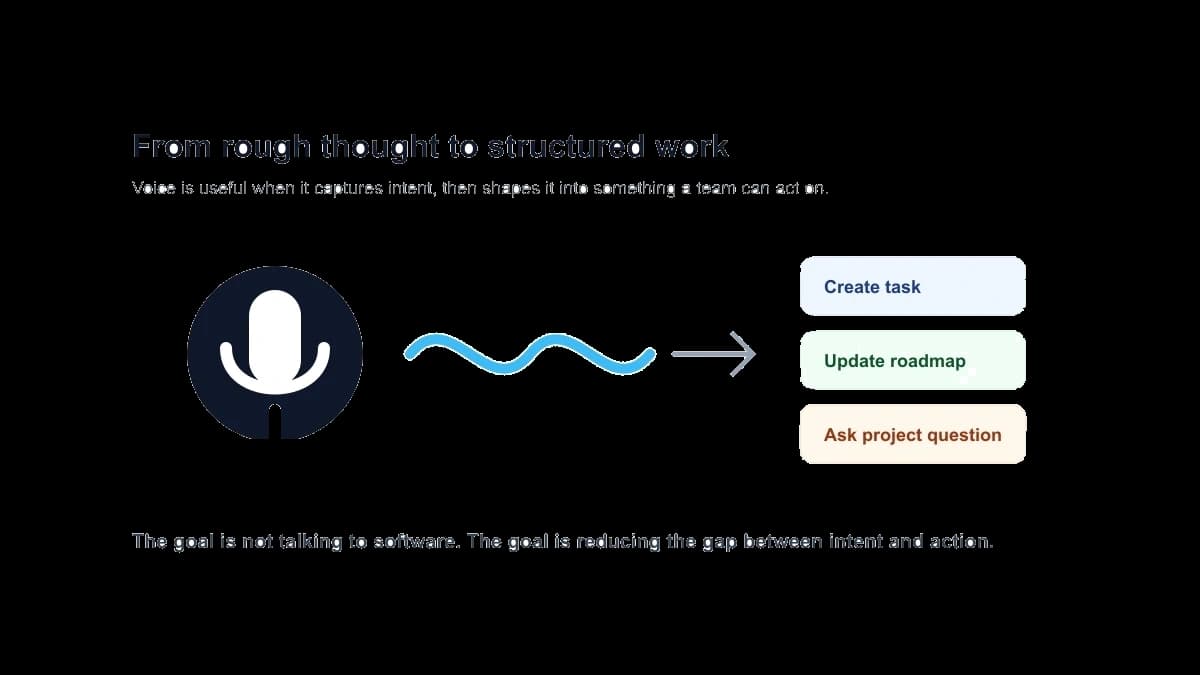
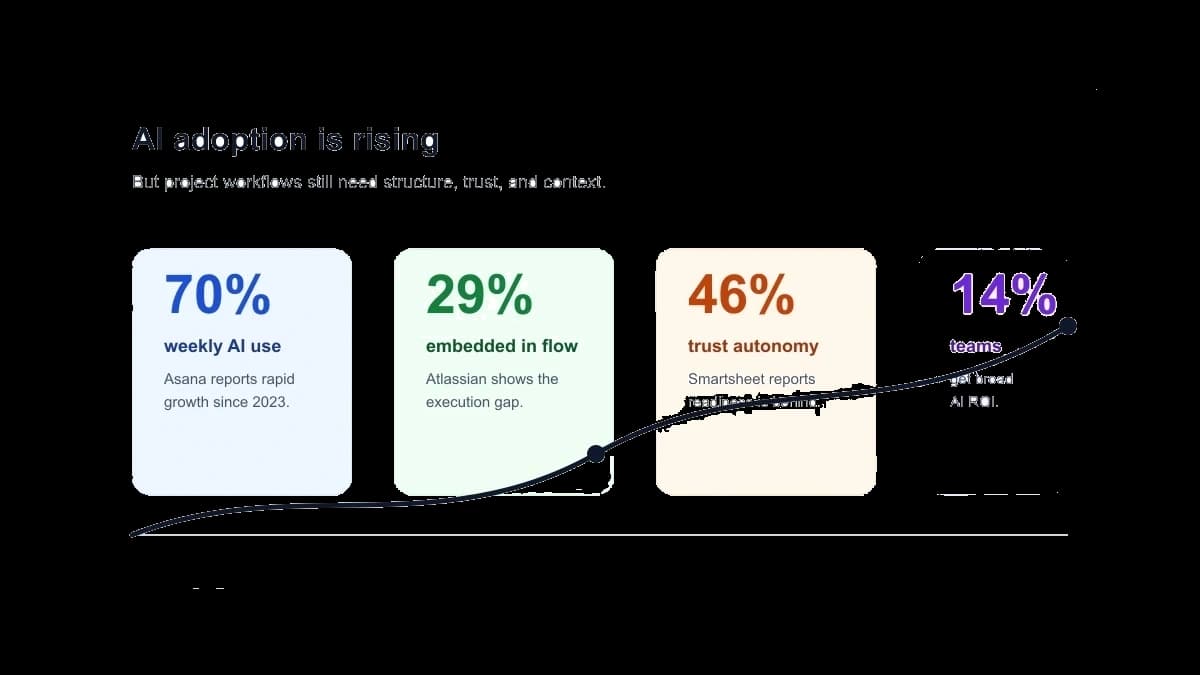
Voice-first planning only works if the output becomes structured.
If voice creates a pile of transcripts, the team has not improved planning. It has only moved the mess from typing to speaking.
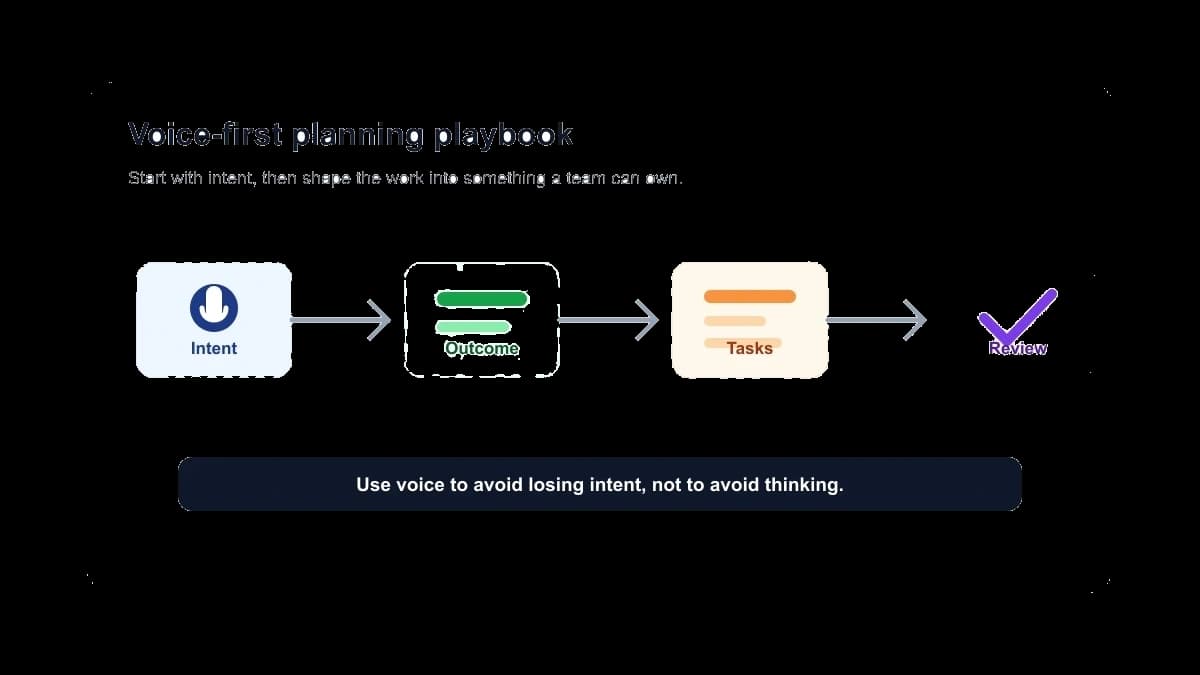
The useful version is different. A rough spoken thought becomes intent, then a small outcome, then owned work, then a plan the team can review and trust.
That is the playbook I use when thinking about voice planning in Bisonflow: preserve the speed of capture without giving up the structure needed for delivery.
1. Capture Intent Before the Task
The first thing to capture is not the task. It is the reason.
Most teams jump too quickly from thought to ticket. That can create a backlog full of work items with weak context. A task may say what to do, but not why it matters or what decision created it.
Start by speaking the intent in one clear sentence:
- "We need to make onboarding clearer before launch because users are dropping before they create a project."
- "The roadmap page needs dependency visibility because release planning is getting hard to explain."
- "Billing needs a safer handoff because team workspaces depend on seat state."
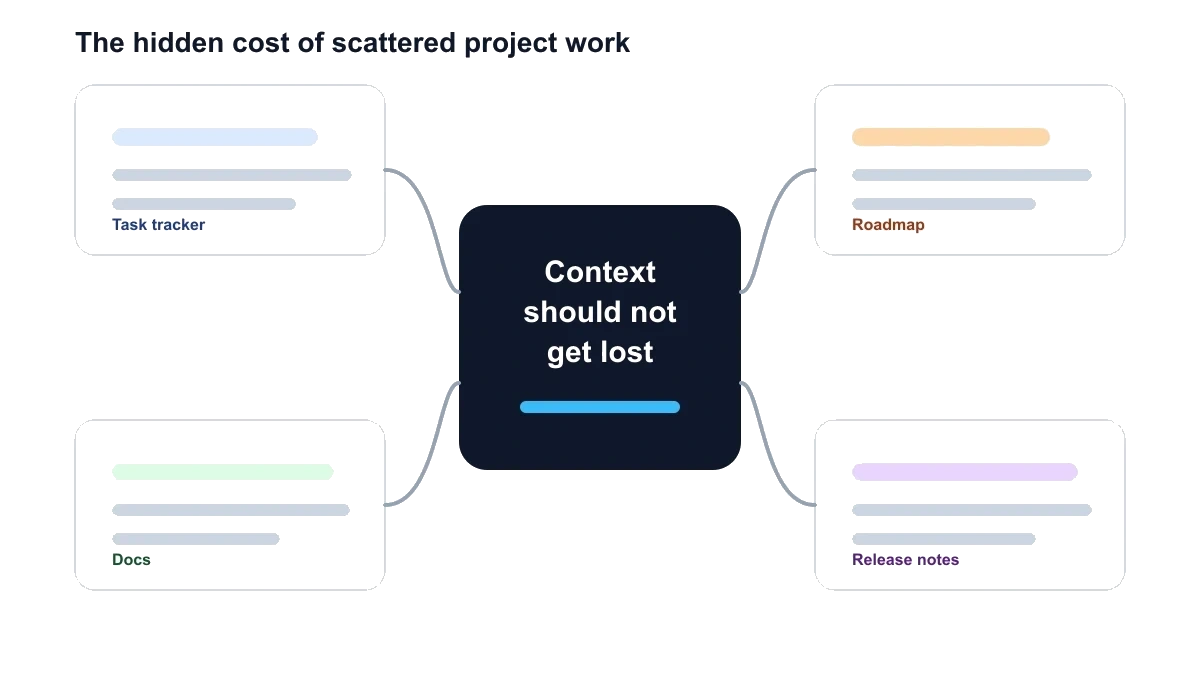
- "The release notes need a better source of truth because we keep reconstructing what shipped."
That sentence gives the system and the team something useful to organize around.
If the intent is weak, the task list will probably be weak too.
2. Turn Intent Into a Small Outcome
After intent, define the outcome.
The outcome should be small enough to ship and clear enough to verify. It should give the team a finish line without pretending every implementation detail is known.
Avoid vague outcomes like:
- "Improve onboarding"
- "Make the roadmap better"
- "Clean up billing"
- "Fix release notes"
Use outcomes that can be checked:
- "A new user can create a project and add the first task without needing help."
- "A project lead can see dependency risk before assigning release dates."
- "A workspace owner can understand who is billed and why."
- "A shipped release can be summarized from linked tasks without manual reconstruction."
Voice can help here because it lets a person say the rough idea naturally. AI can propose a sharper outcome. The human still decides whether the outcome is the right one.
3. Capture the Constraints While They Are Fresh
Planning gets weaker when constraints are remembered later instead of captured early.
After the outcome, capture the constraints that shape the work:
- "This needs to ship before the public launch page goes live."
- "Do not block the billing refactor."
- "Keep the first version simple enough for solo builders."
- "The release note should not mention internal workspace IDs."
- "This depends on the API cleanup being finished first."
These details are easy to lose because they often feel obvious in the moment. They are not obvious two weeks later.
A good voice workflow should attach constraints to the work while the person still remembers them.
4. Split Into Work the Team Can Own
Once the outcome and constraints are clear, split the work into owned items.
A good task usually answers:
- What needs to change?
- Who owns the next action?
- What state means it is done?
- What context should not be lost?
- What does this affect downstream?
For example, a rough spoken plan might become:
- Create onboarding empty-state copy for first project creation.
- Add dependency badge to roadmap items.
- Validate billing seat state before workspace invite.
- Link shipped tasks to release summary draft.
The important part is not that AI produces a perfect task list on the first try. It should produce a reviewable draft that saves the user from formatting work while keeping judgment in human hands.
5. Keep Handoffs Short and Specific
Handoffs are where project context gets lost.
A good handoff should not repeat every implementation detail. It should focus on the delta between what was expected and what is now true.
Use three questions:
- What changed?
- What needs attention next?
- What must be true before this ships?
For example:
- "The onboarding task is now blocked by project creation analytics."
- "The roadmap dependency badge is implemented, but release timing needs review."
- "Billing seat validation is done, but copy still needs a product pass."
This is a natural place for voice because the person handing off work often knows the state before they have time to write a clean update. The product should help turn that rough state into a concise handoff connected to the right task, roadmap item, or release.
Avoid repeating every implementation detail. A handoff should focus on deltas, ownership changes, unresolved risks, release impact, and the next decision the team needs to make.
6. Review the Plan Visually
Voice is a capture method. It should not be the final interface for everything.
After voice creates or updates work, the user should be able to review the result visually. That means checking the task table, roadmap, release scope, or documentation before the team treats the result as true.
Review should look for:
- missing owners
- vague outcomes
- tasks that are too large
- constraints that were not attached
- dependencies that should affect the roadmap
- release impact that should be recorded
This is where planning needs both speed and clarity. Voice gives speed. The workspace gives clarity.
7. Connect the Plan to Release Memory
Voice planning should not stop when tasks are created.
The real test is whether the project remembers what happened later. If a spoken intent becomes tasks, those tasks should connect to the roadmap and release record. If scope changes, the plan should show why. If part of the work ships, the release should preserve the evidence.
This is the difference between capture and project memory.
Useful release memory answers:
- What shipped?
- Why did it matter?
- Which tasks were included?
- What was deferred?
- What should the team remember next time?
If voice planning helps capture intent but the release still has to be reconstructed manually, the workflow is incomplete.
How I Think About This in Bisonflow
Bisonflow should make this loop feel natural:
- Speak the rough intent.
- Turn it into a small outcome.
- Attach constraints.
- Split it into owned work.
- Keep handoffs short.
- Review the plan visually.
- Preserve what shipped.
That is the practical version of voice-first planning. It is not about avoiding thinking. It is about avoiding lost intent and unnecessary formatting work.
The product should do the structuring work. The person should make the judgment calls.
The Practical Rule
Do not use voice to avoid planning. Use voice to keep planning from losing the first, most useful version of intent.
If voice creates more notes, it is not helping. If it turns intent into reviewable project state, it can shorten the path from thought to shipped work.
That is what I want Bisonflow to support: faster capture, clearer structure, and less context lost between the moment someone says the work out loud and the moment the team needs to deliver it.
Anthony Abramo
Founder, Bisonflow
Building voice-first project operations for product and engineering teams.